

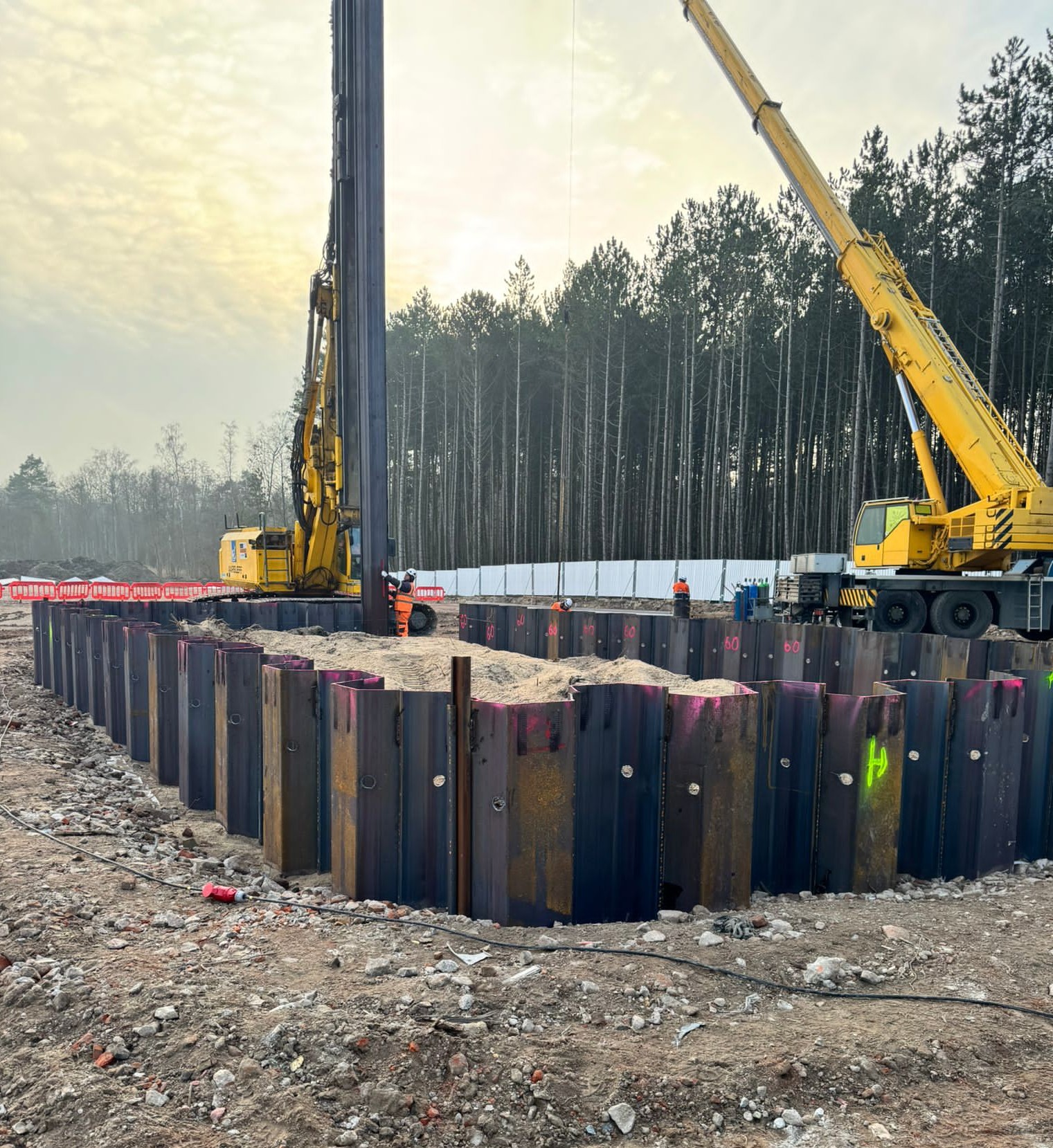


The implementation of the FSRU Offshore project has reached another important milestone. Preparatory works necessary for the construction of the launch shaft of the microtunnel have commenced. The microtunnel will accommodate the gas pipeline connecting the FSRU Terminal quay with the onshore infrastructure. Next year, a tunnel boring machine (TBM), together with the necessary equipment, will be installed in the launch shaft.
The floating LNG terminal being developed in the Gdańsk area will be connected to the national gas transmission system by a subsea pipeline more than three kilometres long. Part of the pipeline will be laid in a 1,100-metre-long microtunnel running beneath the dunes, the beach and the seabed. As a result, construction works related to the terminal will not interfere with environmentally valuable areas and will not limit access to the popular beach in Górki Zachodnie.
Microtunnel – a key element of the offshore part of the project
“Construction of the microtunnel for the subsea gas pipeline is one of the most important tasks we are carrying out as part of the offshore component of the FSRU Programme. At the same time, it is a technologically complex undertaking due to the geological conditions, demanding technical parameters such as diameter and total length, as well as the marine environment,” said Maciej Wawrzkowicz, FSRU Offshore Project Manager at GAZ-SYSTEM.
“The key benefit of the trenchless crossing of the coastal zone is the protection of the dune environment and the coastal forest, as well as maintaining beach accessibility for tourists. Thanks to the use of this technology, the forest and the beach above the gas pipeline will remain untouched. These issues are important both for us as the investor and for the local community, as we have repeatedly learned during meetings and discussions with residents. It is also worth noting that GAZ-SYSTEM has extensive experience in supervising this type of work,” Wawrzkowicz added.
How the microtunnel launch shaft is built
The microtunnel launch shaft is a sealed, temporary excavation in the ground, several metres deep. In the first stage, the contractor drives steel sheet piles into the ground to form a tight wall that isolates and secures the subsequent excavation. In the case of the investment in the Gulf of Gdańsk, around 100 sheet piles with a total length of approximately 18 metres were installed at a depth of about 17 metres. Materials for the construction of the shaft were supplied by Polish suppliers.
In the next phase, works related to the construction of the shaft’s foundation slab will be carried out. In the space thus prepared, a TBM will be installed to begin drilling a tunnel with an external diameter of approximately 2.5 metres and a length of 1,100 metres, leading towards the FSRU Terminal quay. After the microtunnelling works are completed, the TBM cutter head will be retrieved to the surface.
“When building the microtunnel for the subsea gas pipeline, we draw on the extensive experience of both the contractors and our own experts,” said Mateusz Frydrych, Deputy Director of the FSRU Implementation Division at GAZ-SYSTEM. “A similar solution was used during the construction of the Baltic Pipe gas pipeline, and trenchless crossings using advanced technologies are implemented in most of our projects, such as the construction of the Gdańsk–Gustorzyn gas pipeline, part of the onshore component of the FSRU Programme. The ability to use our know-how to limit the impact on the environment and the local community is of great value to us, which we also keep in mind when delivering the largest strategic projects,” Frydrych added.
 DOWNLOAD PDF