

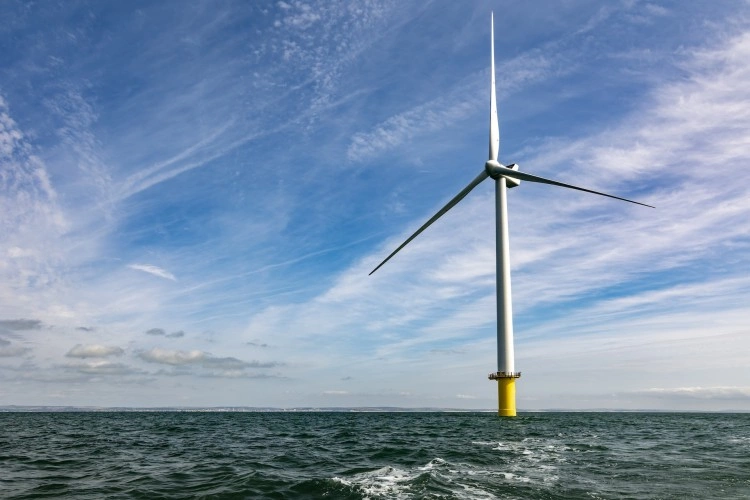


The Baltica 9+ offshore wind project was one of the winners of last year’s first offshore auction in Poland. Its developer, PGE Baltica, is now preparing to issue the first procurement tenders for the project.
In mid-December, Poland held its first auction under the second phase of the offshore wind support scheme. Three projects received backing, including Baltica 9, with an installed capacity of 975 MW. According to Bartosz Fedurek, President of PGE Baltica, the time has come to begin the initial tendering processes.
“All projects that won the December auction now have seven years from the moment the contract for difference was awarded to complete the preparation phase, secure financing, make final investment decisions, carry out construction, complete commissioning, obtain a generation licence, and start production,” Fedurek said. “Seven years may sound like a long time, but it is an ambitious schedule.”
He added that all winning projects are expected to launch their first tenders this year for long-lead items — components with the longest delivery times.
“These will certainly include turbines. This is important, because the turbine market is the biggest bottleneck, so this is likely where we will start our tendering process and contracts. At the same time, we will carry out a range of preparatory activities: detailed design, specification development, and tender documentation. All of this will form the foundation for local content,” Fedurek explained.
PGE Baltica has set ambitious targets for domestic participation. While local content in its first project, Baltica 2 Offshore Wind Farm, was around 20–30%, Baltica 9+ is expected to reach at least 45%.
The project’s name has also changed slightly — from Baltica 9 to Baltica 9+. According to Fedurek, the “plus” reflects the expansion of the project:
“Baltica 9 is our organic project, covering area 44.E.1, for which PGE Baltica secured the development rights in 2023. The ‘plus’ comes from last year’s acquisition of offshore assets from RWE in Germany, which some describe as a form of ‘repolonisation,’” he said.
Through the acquisition, PGE Baltica gained, among other things, an environmental permit for area 44.E.1, previously held by RWE, which had hoped to secure a licence for operations. This allowed the Polish developer to bypass much of the permitting process.
“It represented huge savings — economically, in terms of costs, and in terms of time. Had we developed the project entirely ourselves, Baltica 9 would only have been ready for auction around 2029,” Fedurek noted.
The assets acquired from RWE also include the first-phase offshore wind project formerly known as FEW Baltic 2 Offshore Wind Project, with a planned capacity of 350 MW, located adjacent to Baltica 9. This effectively expanded the offshore area available to PGE Baltica.
From a business perspective, we now see this as a single, combined undertaking, which we are optimising in terms of both CAPEX and OPEX. The wind farm will continue to be serviced from the port of Ustka, but not from the location originally planned by RWE. Instead, it will operate from the O&M support complex we are building for PGE’s offshore projects,” Fedurek added.
 DOWNLOAD PDF