

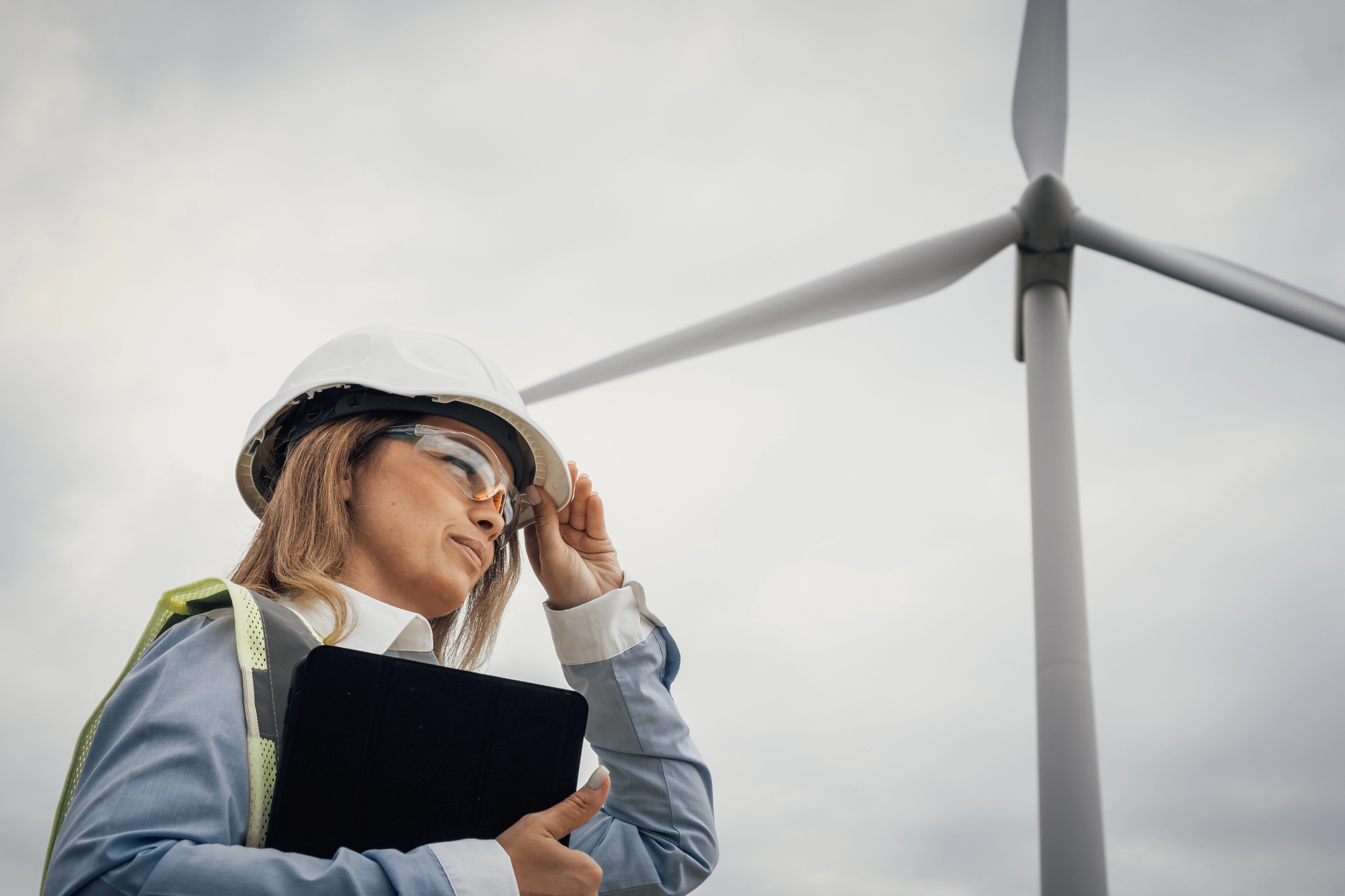


International Day for Women in Maritime, will be globally celebrated on 18 May. The initiative was established to highlight the role of women in one of the world’s most important economic sectors. Today, the maritime industry accounts for more than 80% of global goods transport and remains a key pillar of international trade. At the same time, the sector is undergoing a major transformation linked to digitalisation, new technologies, and the development of both offshore and onshore wind energy.
Despite this dynamic growth, women remain underrepresented in the maritime sector. According to the Women in Maritime Survey 2024, women account for only 19% of employees in national maritime administrations and 16% of staff employed in the private maritime sector. At sea, their share is even lower – women make up just 1% of all seafarers. At the same time, the data indicates that the situation is gradually improving. Between 2021 and 2024, the number of women working in the maritime sector increased from 152,000 to more than 176,000.
As the industry expands, demand for qualified personnel is also increasing. This is particularly evident in the offshore and wind energy sectors, where projects require a broad range of competencies – from engineers and technical specialists to logistics and safety experts, as well as management and service personnel.
According to data from WindEurope, employment in the European wind energy industry could rise to more than 600,000 jobs by 2030. Experts already point out that the market is beginning to face a shortage of specialists with competencies aligned with modern technologies and the needs of the energy transition.
Gdańsk University of Technology responds to market demand
New educational programmes are intended to address these challenges. One example is the new interdisciplinary Smart Renewable Energy Engineering programme launched in 2025 by Gdańsk University of Technology as part of the DigiWind initiative. The curriculum combines technical knowledge, managerial competencies, and modern technological solutions used in the offshore sector.
While preparing the programme, the university cooperated closely with industry representatives in order to respond as effectively as possible to real labour market needs. Students already emphasise that the course stands out due to its practical approach and broad perspective on the offshore sector.
– “It is an extremely innovative programme combining fields of knowledge that directly translate into competencies needed in the industry. In Poland, there is a shortage of master’s degree programmes of this kind. Beyond the typically engineering-related aspects associated with mechanics, electrical engineering, or structural strength, the curriculum also includes subjects related to management, which allows students to acquire a broad range of skills. It is genuinely interesting and important in such a dynamically developing market as offshore,” emphasises Martyna Kamińska, a student of the Smart Renewable Energy Engineering programme.
For many students, the programme’s greatest advantage is its interdisciplinary nature. Female students point out that it combines competencies from as many as six university faculties.
– “I particularly value the IT-related areas, which are now needed in almost every industry. I can see the scale of investment in Poland’s offshore sector, which is why I believe development in this field offers very good career prospects,” says Klaudia Pollak, a first-year Smart Renewable Energy Engineering student at Gdańsk University of Technology.

Photo: Politechnika Gdańska
A competence-based approach
The female students point out that, increasingly, in companies that take a long-term view and move with the times, hiring decisions are based on competencies rather than gender stereotypes.
– “I have noticed that in the companies I apply to, gender matters less and less. What is primarily assessed are competencies. Candidates are given specific tasks to solve and are evaluated on that basis. I see the problem elsewhere – on our course there are only nine women among 27 students. I think many women are either unaware that they can develop a career in this industry or are intimidated by it,” the students emphasise.
Although women still remain a minority both on the course and across the wider maritime industry, the students note that the situation is gradually changing and companies are becoming increasingly open to diversity.
– “If a candidate has the right skills, companies genuinely want to recruit that person and are willing to adapt the working environment accordingly,” they say.
The students also stress the importance of soft skills, which are increasingly proving crucial in teamwork and project management.
– “It may sound stereotypical, but I have noticed that good work organisation, multitasking and attention to detail are extremely valuable in professional life. Women often pay close attention to details and are good at organising team work,” says Martyna Kamińska, a participant in the programme.
The students admit, however, that the beginnings of working in a technical environment can be difficult and often require proving one’s competence.
– “When I started working as an intern in production, some older employees looked down on me. There was this attitude of: ‘a young girl comes in and will tell us what to do’. I had to demonstrate that I had the necessary competencies and that the changes I proposed were meant to help employees, not make their work more difficult. Once they saw that I genuinely wanted to cooperate with them and listen to them, their attitude changed completely,” recalls Klaudia Pollak.
Practical experience and cooperation with industry
One of the greatest strengths of the DigiWind programme is its practical dimension and close cooperation with industry. Students regularly take part in study visits and meetings with representatives of companies operating in the offshore sector.
– “Thanks to European Union funding, the lecturers organise numerous trips and study visits for us. Among other places, we visited ORLEN Petrobaltic, where we were able to see a modern Crew Transfer Vessel used in offshore projects. Soon we will also visit the wind farm in Potęgowo,” the students explain.
Some students have also been offered a unique opportunity to climb a wind turbine.
– “A few students with the best academic results will be able to go right to the top of a wind turbine. It is an incredible opportunity to see what such infrastructure looks like from the inside,” the students say.
Students also visit shipyards and gain first-hand insight into the implementation of offshore projects directly from industry representatives.
– “We had the opportunity to visit a shipyard and learn directly how such projects are delivered. Being able to see it in real life and speak with people from the industry is extremely valuable to me,” stresses Martyna Kamińska.
The study programme also includes training in the use of modern technologies. Students will, among other things, be able to obtain certification in the use of specialist SIMA software provided by SINTEF, which is widely used in the offshore sector.
– “We also had a meeting with a company specialising in virtual reality, during which we learned how this technology is used for offshore wind turbine servicing training. The training took place inside a digitally recreated turbine, so we could experience in practice what such work looks like,” the students explain.
Although the maritime and offshore industries are still associated mainly with men, the students observe that the situation is changing year by year. As they emphasise, the most important qualities today are openness to development, willingness to learn, and the courage to take on new challenges.
– “The maritime industry is changing extremely dynamically due to new technologies and new ways of working. That is why, alongside technical competencies, a willingness to develop, an open mind, and readiness for continuous learning are equally important,” conclude the students of the Smart Renewable Energy Engineering programme.
Photo: Depositphotos
 DOWNLOAD PDF