

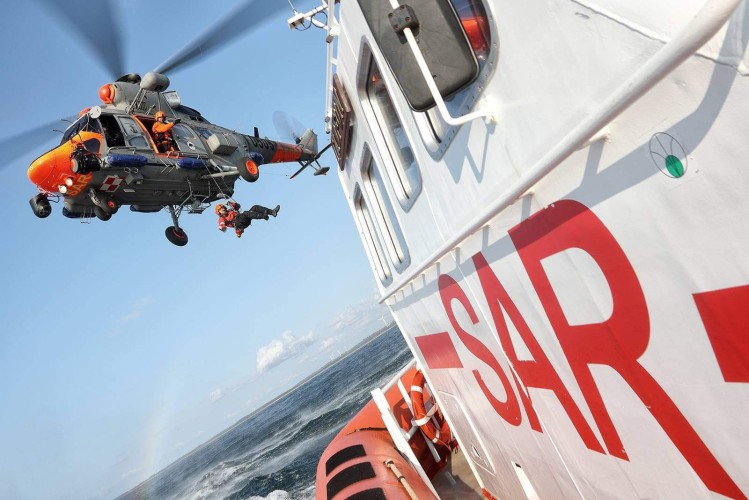


Construction has begun on the first of two planned SAR-1501 rescue vessels for the Polish Maritime Search and Rescue Service, with delivery of the first unit scheduled for autumn this year. The build is being supervised by Polski Rejestr Statków S.A.
Work is under way at the Swede Ship Marine Aktiebolag yard in Fagerfjäll, where construction of the specialised vessel for Poland’s maritime rescue service has commenced. The project follows a contract awarded in May last year under a public tender for the delivery of two specialised rescue craft (cabin rescue boats) for operations on the Vistula Lagoon and the Szczecin Lagoon, along with supporting equipment.
The vessels will measure approximately 14–16 metres in length, up to 5.5 metres in beam, with a draught of no more than 0.9 metres. They are expected to reach speeds of at least 30 knots and operate in lagoon waters as well as in the coastal zone up to 20 nautical miles offshore. Their hulls are designed for durability in harsh conditions, including winter operations.

Swede Ship Marine Aktiebolag
According to the Polish Maritime Search and Rescue Service, the vessels will be built under the supervision of the Polish Register of Shipping and will receive its HSC III pat Lm2 class notation. Their engines will comply with TIER II emission standards under MARPOL Annex VI, incorporating alternative emission control measures. This includes limiting full engine power outside rescue operations, with an override function available to the helmsman when required.
The project is co-financed by the European Union and aims to enhance the operational capabilities of Poland’s maritime rescue service. The formation regularly conducts search and rescue missions at sea and along the coast. As its representatives have repeatedly stressed, the growing volume of maritime traffic in the Baltic—alongside the expansion of offshore infrastructure such as wind farms—is increasing both the scale and complexity of its responsibilities. In addition to expanding recruitment, modern equipment is essential to ensure fast, efficient and safe operations, even in the most demanding conditions.
 DOWNLOAD PDF