

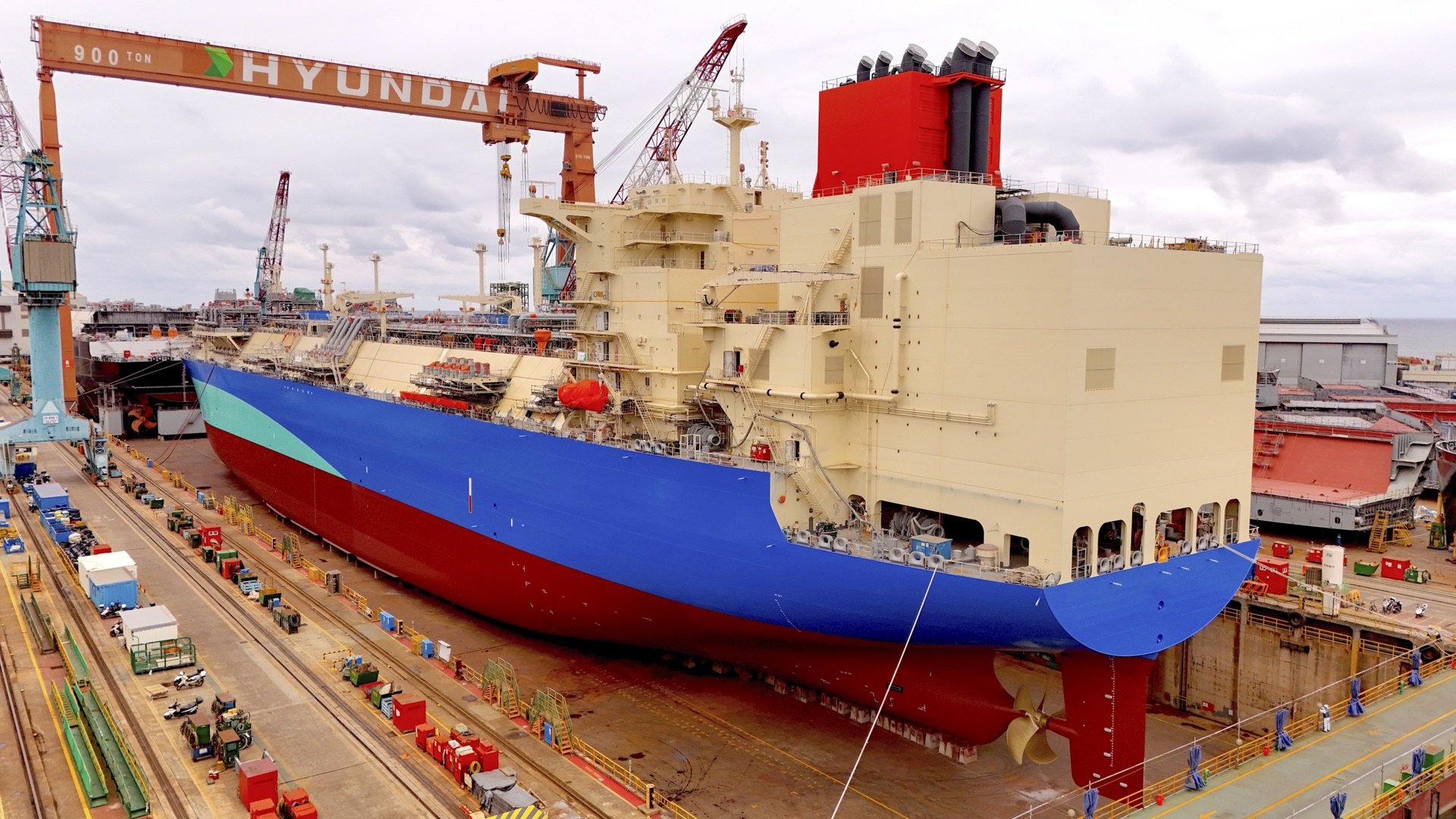


Four market participants have secured long-term access to the services of the planned FSRU 2 terminal, paving the way for the construction of a second floating LNG import terminal in Gdańsk Bay. As a result, Poland will operate three LNG terminals with a combined regasification capacity exceeding 20 bcm per year. The development further strengthens the country's position on the regional gas market and creates an opportunity for Poland to establish one of the most important gateways to the global LNG market in Central and Eastern Europe.
The Open Season procedure conducted by GAZ-SYSTEM has concluded successfully. The results confirm strong market interest in the new infrastructure, which is expected to enhance security of supply, support competition and lay the foundations for the further development of a regional gas hub. Market demand exceeded the offered capacity of 39 slots per year. Consequently, GAZ-SYSTEM decided to increase the technical parameters of the new terminal, raising its regasification capacity from the originally planned 4.5 bcm to 6.1 bcm of natural gas annually.
Strengthening Poland's Position on the European Gas Market
Strengthening Poland's role as a regional hub for gas trading, storage and transmission in Central and Eastern Europe brings a range of benefits. Alongside enhanced energy security, one of the most significant advantages will be the gradual reduction of gas prices for end consumers. Greater competition and more efficient use of infrastructure are expected to contribute to a sustained reduction in gas supply costs, benefiting both households and industry.
"This is a historic decision for Poland's energy security. We will build a third LNG terminal in the Baltic Sea region. The new facility will significantly increase our capabilities for importing liquefied natural gas. FSRU 2 in Gdańsk Bay will become one of the pillars of energy security for Poland and Central and Eastern Europe. We are building a new architecture of European energy security and strengthening our position as a regional energy hub," said Energy Minister Miłosz Motyka.
"We are consistently developing energy infrastructure that will strengthen Poland's resilience and ensure stable gas supplies for decades to come. FSRU 2 is an investment in national security, economic competitiveness and Poland's strong position on the European energy market. Diversification of supply sources and increasing LNG regasification capacity will create a unique strategic opportunity for Poland, while simultaneously strengthening regional energy security and establishing conditions for stable and predictable energy prices for citizens and businesses," said Wojciech Wrochna, Secretary of State at the Ministry of Energy and Government Plenipotentiary for Strategic Energy Infrastructure.
The FSRU 2 (Floating Storage and Regasification Unit) project represents the next stage in the development of Poland's LNG infrastructure, following the LNG terminal in Świnoujście and the first FSRU terminal in Gdańsk. It responds to growing market demand related to supply security, diversification of gas sources and the development of a competitive and flexible gas market.
"The results of the Open Season procedure send a clear signal from the market. Participants have confirmed that they see Poland as a place for further development of trading activities, the creation of new supply chains and the increased use of LNG as an important element of the energy system. This validates our investment strategy and marks another step in building modern energy infrastructure and a competitive market for Poland and the wider region. It also represents a fundamental transformation for GAZ-SYSTEM, which will join the ranks of Europe's leading LNG infrastructure operators, with one of the largest import capacities in the European Union. Thanks to the implementation of two FSRU terminals and our existing infrastructure investments, Poland will have gas import capacities of approximately 50 bcm per year. This will not only strengthen the energy security of Poland and the region, but also create conditions for the development of a competitive gas hub, supporting increased competition, more efficient use of infrastructure and the gradual reduction of gas supply costs," said Sławomir Hinc, President of GAZ-SYSTEM.
Open Season: From Market Consultation to Investment Decision
As part of the Open Season procedure for FSRU 2, GAZ-SYSTEM allocated regasification capacity to four companies. For the first time in history, more than one market participant has secured access to LNG infrastructure operated by GAZ-SYSTEM through an Open Season process. Moreover, following the decision to increase the terminal's regasification capacity, additional slots will remain available and will be offered to market participants in the future.
In total, 47 slots per year were contracted for the period 2030–2039, and 35 slots annually for the period 2040–2044. Following the increase in the terminal's technical capacity to 58 slots, the overall booking level for the entire service period reached 74%.
Poland as a Regional Gas Hub
The expansion of LNG infrastructure forms part of Poland's long-term strategy to strengthen energy security and build a modern gas market. The combined regasification capacities of Poland's LNG terminals will not only secure domestic demand but also support the development of the regional energy market and the integration of gas systems across Central and Eastern Europe.
Combined with extensive transmission infrastructure, including interconnectors with Denmark, Germany, the Czech Republic, Slovakia and Lithuania, Poland will have annual gas import capacity of nearly 50 bcm by 2030. This potential positions the country as a key gas hub for the region.
Increased gas and LNG import capabilities will directly enhance competition among suppliers. As a result, they are expected to contribute to price stabilisation and bring gas prices closer to levels observed in the most developed European markets. At the same time, improved utilisation of infrastructure will help reduce the unit costs of gas transmission and LNG regasification.
Photo: GAZ-SYSTEM press release
 DOWNLOAD PDF