

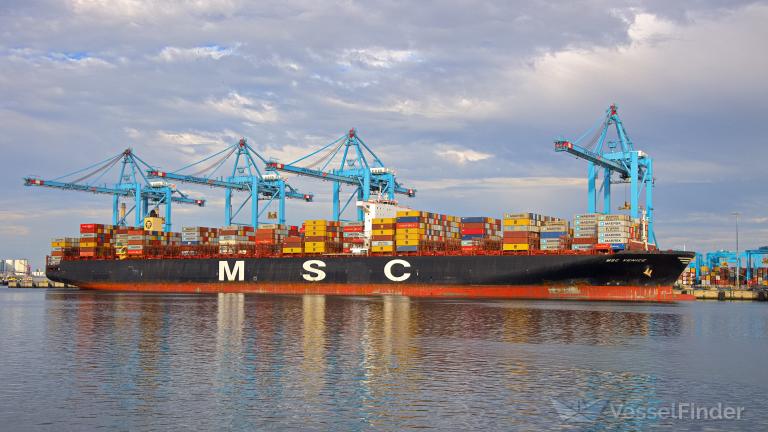


For the first time, the results of years of investment to expand the Port of Gdynia's capabilities are about to become visible, with the port preparing to welcome the first nearly 400-metre-long container ship in its history.
Due to adverse weather conditions, the arrival of MSC Venice has been postponed. According to the latest schedule, the vessel is now expected to call at the port on 21 July.
Under the current timetable, MSC Venice is scheduled to arrive at the Port of Gdynia in the early hours of 21 July. The call will mark the first time in the port's more than 100-year history that it has accommodated a container ship approaching 400 metres in length. The arrival of the ocean-going giant has been made possible by a multi-year programme to expand the port's operational capabilities.
Sailing under the Liberian flag, MSC Venice measures 399 metres in length and 54 metres in beam. At full load, the vessel has a 16-metre draught. It has a gross tonnage of 176,490 GT, a deadweight of 186,650 tonnes and a displacement of 242,331 tonnes. From keel to the top of its mast, the ship stands 71.11 metres high—roughly equivalent to a 22- to 25-storey building. The vessel has a capacity of 16,652 TEU, a maximum speed of 23 knots, and was built in China in 2016.
The vessel will berth at the Baltic Container Terminal (BCT) in Gdynia.
Accommodating ships such as MSC Venice has required years of coordinated efforts by the Port of Gdynia Authority, the Maritime Office in Gdynia, the Polish Navy, and numerous other institutions. Key elements of the programme included deepening the port basins to 15.5 metres, widening the harbour entrance to 140 metres, relocating the floating dock of PGZ Naval Shipyard to create a turning basin for the largest vessels, and modernising Helskie Quay, including the installation of new ship-to-shore container cranes.
With the arrival of MSC Venice, the Port of Gdynia will join the ranks of Baltic ports capable of handling the largest container vessels able to transit the Danish Straits. It will also become Poland's second port, after Port of Gdańsk, with the infrastructure required to accommodate ultra-large container ships.
Photo: Rush 2112 / VesselFinder.com
 DOWNLOAD PDF