

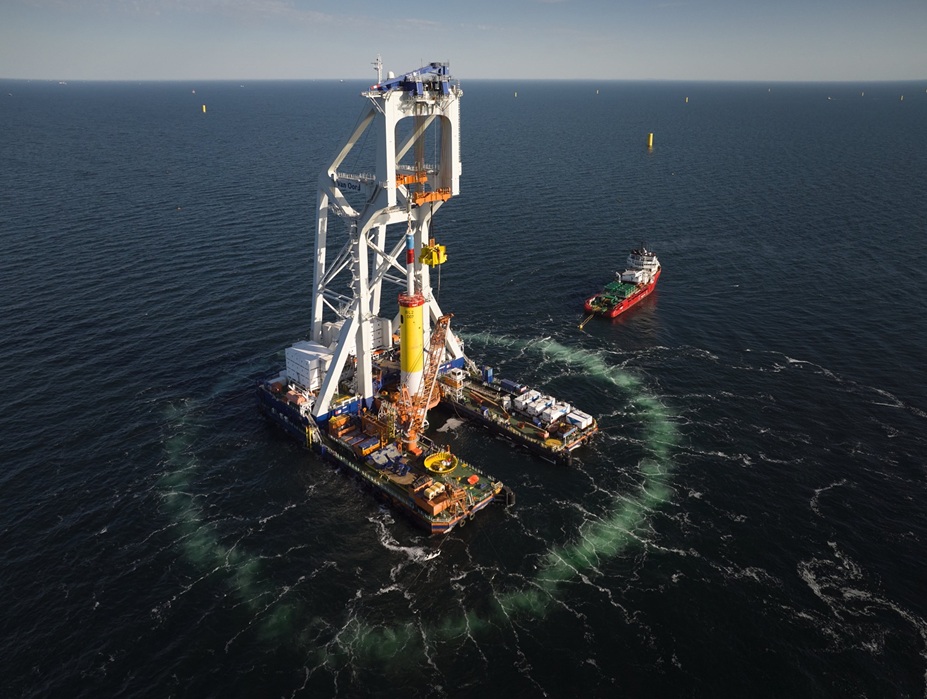


On the Baltica 2 offshore construction site, all 111 foundations have now been installed, including 107 for wind turbines and four for offshore substations. PGE and Ørsted have completed this key stage on schedule. The efficient execution of one of the most demanding offshore operations is the result of precise planning, effective coordination of works and experience in delivering large-scale offshore projects.
The Baltica 2 monopiles are up to 100 metres long, with diameters ranging from 7.5 to 10.5 metres and weighing approximately 1,900 tonnes. The installation of each one was a complex logistical operation requiring precise coordination of the production and transport process, appropriate preparation of the installation site, the deployment of specialised vessels and suitable weather conditions.
The installation of additional steel structures is expected to continue until the end of 2026. At the same time, preparations are under way for the installation of further components of the wind farm: the offshore substations and export cables later this year, followed in 2027 by the inter-array cables and wind turbines. According to the schedule, the first electricity from the Baltica 2 wind farm is expected to be generated in the first half of 2027, with full commercial operation planned by the end of 2027.
Planning that allowed a faster pace
Before work began, the Baltica 2 project team carried out a detailed analysis of various implementation options and potential scenarios that could affect the installation process. The preparations drew on Ørsted’s experience gained through the delivery of offshore wind projects across multiple markets, as well as the expertise of Van Oord, which was responsible for carrying out this stage of the works. As a result, the Baltica 2 project team developed solutions designed to minimise key risks related, among other things, to the installation sequence, the availability of components and installation vessels, logistics and the coordination of offshore operations.

Greater flexibility thanks to two vessels
An important element of the plan was the deployment of two specialised installation vessels operated by Van Oord – Svanen and Aeolus. By combining the capabilities of both vessels with its experience in offshore wind farm installation, the project team was able to increase installation capacity, optimise the sequence of offshore works and ensure greater flexibility throughout the campaign. This integrated approach helped the teams maintain the pace of operations, respond effectively to changing offshore conditions and complete the monopile installation campaign on schedule.
“Completing the campaign on schedule demonstrates the importance of thorough preparation and managing dependencies between successive stages of work in the delivery of offshore projects. At Baltica 2, the key was to plan the logistics, vessel operations and installation sequence in such a way as to minimise the risk of downtime while maintaining operational flexibility. The smooth execution was made possible by a strong team whose expertise, commitment and close cooperation enabled us to keep the campaign on track. The experience Ørsted has gained from delivering more than 30 offshore wind projects across three continents allows us to identify potential bottlenecks at an early stage and respond before they begin to affect the schedule of the project as a whole” – said Ulrik Lange, Managing Director of Baltica 2 at Ørsted.
“Baltica 2 is currently the largest investment project under development within the PGE Group and one of the most important energy transition projects in Poland. Every stage of the investment completed according to plan confirms the importance of consistent and comprehensive preparation for this undertaking. Alongside the work being carried out offshore, we are also developing land-based infrastructure intensively, including facilities required to transmit electricity generated by the wind farm to the National Power System, as well as operational and maintenance facilities. These are key elements of the project as a whole and will ensure the efficient and safe operation of the offshore wind farm for decades to come” – said Patrycja Kunc-Rozbój, Vice-President of the Management Board of PGE Baltica.
“The safe and timely completion of the monopile installation campaign for Baltica 2 is an important milestone both for the project and for the development of offshore wind energy in Poland. We are pleased to have been able to contribute our experience in the offshore wind sector, specialised vessels and the expertise of our experienced project teams to this complex operation. Close cooperation with Ørsted played a key role in maintaining the pace of work and successfully completing this stage” – said Maurits den Broeder, Managing Director Offshore Energy at Van Oord.

Next stages of offshore construction
 DOWNLOAD PDF