

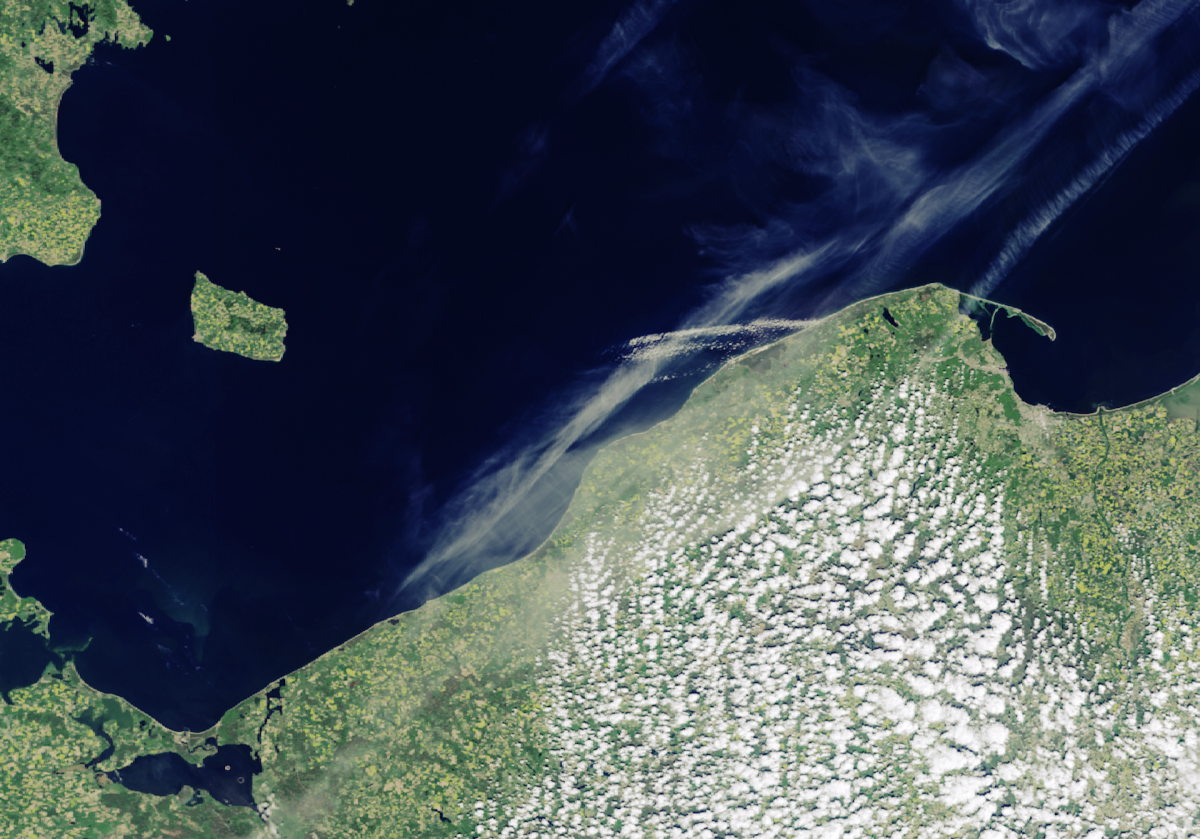


Poland is accelerating the implementation of strategic investments aimed at strengthening the country’s position, security, energy security and economy in the Baltic. The Council of Ministers today adopted a special bill. Among the projects that will be subject to shortened procedures are the construction of National Road No. 7 to the Port of Gdynia, the construction of an external port in Gdynia, the expansion of the external port in Świnoujście, the construction of Pomerania Cape and the expansion of the railway network around the ports.
Investments related to Poland’s nuclear power plant will also be accelerated.
“Once these investments have been completed, I will be able to report to you in all good conscience that Poland, after several years of our work, has become a Baltic power” – Prime Minister Donald Tusk said.
Key and Strategic Investments to Be Accelerated
Several days ago, a ceremony was held in Gdynia to christen Wicher, the first frigate being built under the Miecznik programme. Two days later, during Polish Armed Forces Day celebrations, thousands of Poles were able to watch the naval parade. Both events were symbolic, but also tangible, confirmation that Poland is consistently strengthening its capabilities at sea.
“Today we will adopt a bill under which we will radically accelerate the preparation and implementation of key infrastructure investments that affect Poland’s defence and economy" – Prime Minister Donald Tusk said ahead of the Council of Ministers meeting.
The bill prepared by the Ministry of Infrastructure precisely identifies investments of key importance from a national perspective that will be able to be carried out more quickly.
“The construction of National Road No. 7 to the Port of Gdynia, the construction of an external port in Gdynia, the expansion of the external port in Świnoujście, the construction of Pomerania Cape, the expansion of the railway network around the ports – these are some of the investments that will be radically accelerated" – the head of government said.
Other examples of investments include the construction of infrastructure for a transhipment station on Port Island, together with a rail-and-road crossing over the Martwa Wisła. Railway investments connected with the maritime economy will also be accelerated on the following routes: Szczecin–Świnoujście, Wrocław–Szczecin, Chorzów-Batory–Tczew, Warsaw–Gdańsk and Nowa Wieś Wielka–Gdynia.
Investments related to the nuclear programme and the construction of a nuclear power plant in Pomerania will also be accelerated. These will include infrastructure in the municipalities of Choczewo and Krokowa, as well as in Poland’s maritime areas.
“We are creating an entire system that will give Poland an absolutely leading and key role in the Baltic. (…) Once these investments have been completed, I will be able to report to you in all good conscience that Poland, after several years of our work, has become a Baltic power and that the Baltic has truly become a Polish sea” – the Prime Minister announced.
Today, the statistics are clear. Gdańsk is the largest port on the Baltic. Over the past two years, it has overtaken the ports of Amsterdam and Marseille and is now sixth in Europe. The Port of Gdańsk achieved a record result in its history, with 7.9 million tonnes of cargo handled in July.
“I hope the President will not think of vetoing the bill, thanks to which key investments will be accelerated. I think we have all had enough of blockages that paralyse projects carried out for the good of Poland. This is a race against time and a race for first place for Poland” – the Prime Minister said.
At present, the preparation of major investments can take many years, partly due to numerous consultations, decisions and administrative procedures.
Photo: ESA
 DOWNLOAD PDF