

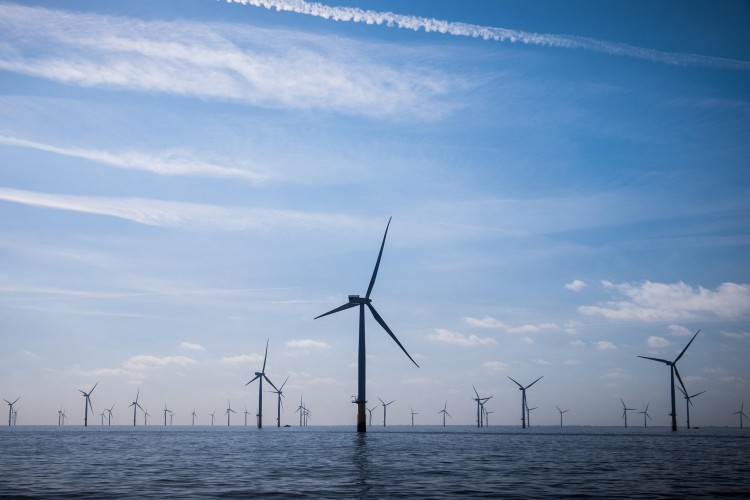


Governments around the world should speed up the development and construction of offshore wind farms in order to reduce the risk of future energy crises and strengthen energy security, according to the latest Global Offshore Wind Report 2026 published by the Global Wind Energy Council (GWEC). The report highlights Poland as an example of effective policy support for the sector.
Offshore Wind Enters a Phase of Rapid Growth
The report shows that the offshore wind sector has entered a period of very rapid expansion. In 2025, 9.3 GW of new offshore capacity was connected to grids worldwide, representing a 16% increase compared with the previous year. This was the third-best annual result in the history of the industry.Total installed offshore wind capacity reached 92.5 GW at the end of last year, enough to supply electricity to more than 100 million households globally.
Growth Expected to Accelerate Further
According to GWEC forecasts, the pace of expansion will increase even further in the coming years. The organisation expects the market to grow at an average annual rate of 24% between 2026 and 2030.
More than 50 GW of offshore projects are already under construction worldwide.
Annual installations are expected to double in 2026.
They are forecast to triple by 2031.
Annual installed capacity is projected to exceed 50 GW by 2035.
As a result, global offshore wind capacity is expected to rise to around 420 GW by the end of 2035 — almost four times the current level.
Poland Highlighted as a Model for Offshore Wind Development
Poland has been identified in the GWEC report as one of the most promising offshore wind markets in Europe. The report's authors note that the country possesses significant potential for offshore wind development in the Baltic Sea, while projects currently under construction could establish Poland as one of the sector’s main growth hubs in the region over the coming decade. According to GWEC, the development of Polish offshore wind farms will play an important role not only in the country's energy transition but also in the creation of a new regional offshore industry hub encompassing ports, manufacturing facilities and supply chains.
The report gives a positive assessment of Poland’s regulatory framework supporting offshore wind development. Particular attention is paid to the country's Contracts for Difference (CfD) scheme, which provides investors with long-term revenue stability and reduces exposure to energy price volatility. According to GWEC, this mechanism is among the policy tools that have helped accelerate offshore wind deployment across Europe and could serve as an example of effective support for other countries seeking to develop the sector. The organisation stresses that maintaining a predictable regulatory environment will be crucial for the timely delivery of future phases of Poland’s offshore wind programme.
China Dominates the Global Offshore Wind Market
China remains the world's largest offshore wind market. In 2025, the country commissioned 6.6 GW of new offshore capacity, accounting for more than half of all new installations worldwide. Total installed offshore wind capacity in China has now reached 48.4 GW.
Strong growth is also continuing in Europe, where nearly 2 GW of new offshore capacity was brought online last year. The United Kingdom remains the regional leader, while significant investments are also being made in Germany, the Netherlands and France.
New markets are gaining momentum as well. In the Asia-Pacific region, outside China, new offshore wind farms are being developed in Taiwan and South Korea. At the same time, floating offshore wind projects are being advanced in the Celtic Sea off the coast of the United Kingdom. Meanwhile, countries bordering the North Sea – including Germany, Denmark, the Netherlands, Belgium and the UK – are pursuing joint plans to establish one of the world's largest offshore wind energy hubs.
Major Challenges Still Facing the Industry
Despite record growth, GWEC notes that a number of barriers continue to constrain the sector's development. Among the most significant are lengthy permitting procedures, grid capacity constraints and supply chain challenges. The organisation is calling for offshore wind projects to be recognised as strategic investments and for permitting and grid-connection processes to be accelerated.
According to the report's authors, offshore wind could become one of the fastest-growing segments of the global energy industry over the next decade, playing a key role both in the decarbonisation of economies and in strengthening energy security.
GWEC also criticises procurement models based solely on selecting the lowest-priced bid. The organisation argues that auction frameworks should be designed to ensure project viability, investment stability and supply chain development. In this context, well-designed Contracts for Difference (CfDs) are viewed positively, as they help reduce investment risk.
At the same time, the sector requires massive investment in turbine manufacturing facilities, foundations, cables, installation vessels and a skilled workforce. Without long-term market visibility, companies are reluctant to commit to multi-billion-pound production investments. GWEC warns that supply chain shortages could become one of the industry's main constraints on future growth.
 DOWNLOAD PDF