

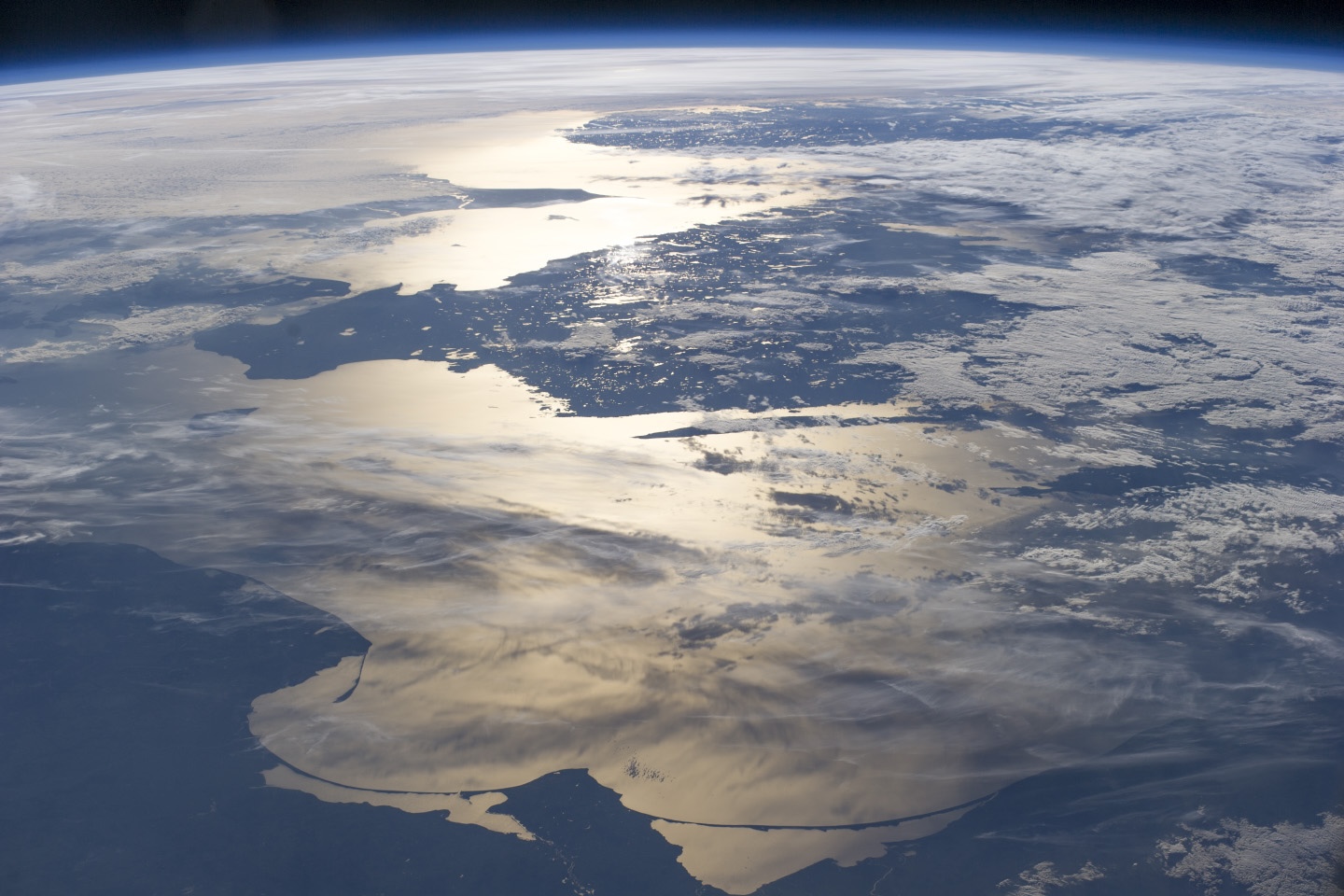


Thanks to funding of more than PLN 12.5 million from the Foundation for Polish Science, researchers from the University of Warsaw, the Institute of Oceanology of the Polish Academy of Sciences (PAN) and the Institute of Hydro-Engineering of the Polish Academy of Sciences will develop a Digital Twin of the Baltic Sea.
The MERMAID project is intended to support safer planning of maritime activities – from shipping and port operations to environmental protection and emergency response. The project is led by Prof. Piotr Gwiazda from the Institute of Mathematics of the Polish Academy of Sciences and the Interdisciplinary Centre for Mathematical and Computational Modelling at the University of Warsaw.
The Digital Twin of the Baltic Sea will be an advanced computer model designed to reproduce, as accurately as possible, the conditions prevailing at sea, including water and air temperature, wind speed and direction, atmospheric pressure, wave height, wave direction and sea currents.
– The system will predict how the situation develops and, thanks to this, support decisions made by people operating at sea – explained Prof. Piotr Gwiazda, the project leader.
The forecasting tool will answer practical questions such as: what conditions will prevail in a few or several dozen hours, whether it will be possible for a vessel to enter a port safely, when offshore maintenance work should be scheduled, or in which direction pollution may spread.
– Measurements at sea are very expensive and, by nature, point-based. A numerical model makes it possible to transform these scattered data into a coherent picture and predict future developments – Prof. Gwiazda explained.
The Baltic Sea requires a dedicated model
The MERMAID project responds to the growing importance of the Baltic Sea for Poland’s economy and security. For most of the year, the sea is a challenging working environment. During autumn, winter and spring, weather windows allowing safe offshore operations may be very short.
This is particularly important in the Polish part of the Baltic Sea.
– Our coastline largely consists of sandy beaches, long stretches without major ports and relatively difficult operating conditions. This means we need a model dedicated specifically to this area – Prof. Gwiazda emphasised.
Safer shipping, ports and offshore wind
One of the Digital Twin’s most important applications will be supporting operational decision-making. This is becoming increasingly significant in the context of the development of offshore wind farms, LNG terminals, service ports and planned nuclear energy investments.
– There is a growing amount of infrastructure in the Baltic Sea that does not operate only in summer and during good weather. If maintenance has to be carried out in winter, the decision to go offshore must be based on very reliable information about the prevailing conditions – said the project leader.
The system is intended to support vessel arrivals at ports, the deployment of service vessels to offshore wind farms, dredging operations and the operation of coastal infrastructure. The objective is not only to improve operational efficiency but also to reduce risks to people, equipment and infrastructure.
– The most dangerous moments in shipping often occur close to shore, where the water is shallower and local conditions can quickly become challenging for vessels. Reliable information on safe operational windows for manoeuvring is crucial – Prof. Gwiazda explained.
Environmental protection and emergency response
MERMAID will also contribute to environmental protection. The Digital Twin will support the analysis of processes that are difficult to observe directly, including the transport of pollutants, changes in water temperature, the movement of water masses and conditions conducive to harmful algal blooms.
The system may also prove useful in emergency situations. In the event of a ship accident, an oil spill or another pollution incident, it will be essential to determine quickly in which direction contaminated water will move and which areas may be at risk.
Supercomputers, data and modelling
The project’s greatest scientific challenge will be combining atmospheric and marine models while integrating multiple data sources. The project will build on the expertise of the University of Warsaw’s ICM, which has been developing numerical weather forecasting models for many years.
– Because measurements at sea are limited, data assimilation methods, which combine observations with numerical model calculations, are of key importance – the scientist explained.
Calculations will be carried out using high-performance computing infrastructure. This is important not only for the quality of the model but, above all, for its operational capability: forecasts must be produced faster than the phenomena they are intended to predict.
One of the project’s objectives is to create a system that operates continuously and provides practical value for end users. Data generated by the Digital Twin will be made available through various channels, including an API, enabling users to download and integrate the information into their own systems. The model outputs will be tailored to the needs of maritime administrations, offshore wind operators, ports and vessel operators.
From prototype to operational forecasting services
The project is being carried out by a consortium comprising the University of Warsaw, the Institute of Oceanology of the Polish Academy of Sciences and the Institute of Hydro-Engineering of the Polish Academy of Sciences. The implementation period is scheduled to last three years. During this time, the researchers will develop, test and calibrate the models, while also preparing tools and services for future users.
At the same time, the Digital Twin of the Baltic Sea will be developed progressively.
– A system of this kind is never built once and for all. You can create the platform and the core services, but their calibration, improvement and adaptation to new data and users’ needs will continue for years – Prof. Gwiazda concluded.
The MERMAID project demonstrates how advanced mathematical modelling, supercomputers and cooperation between science and industry can be translated into practical tools that improve safety, efficiency and the responsible management of the Baltic Sea’s resources.
Photo of the Baltic from Space: ESA
 DOWNLOAD PDF