

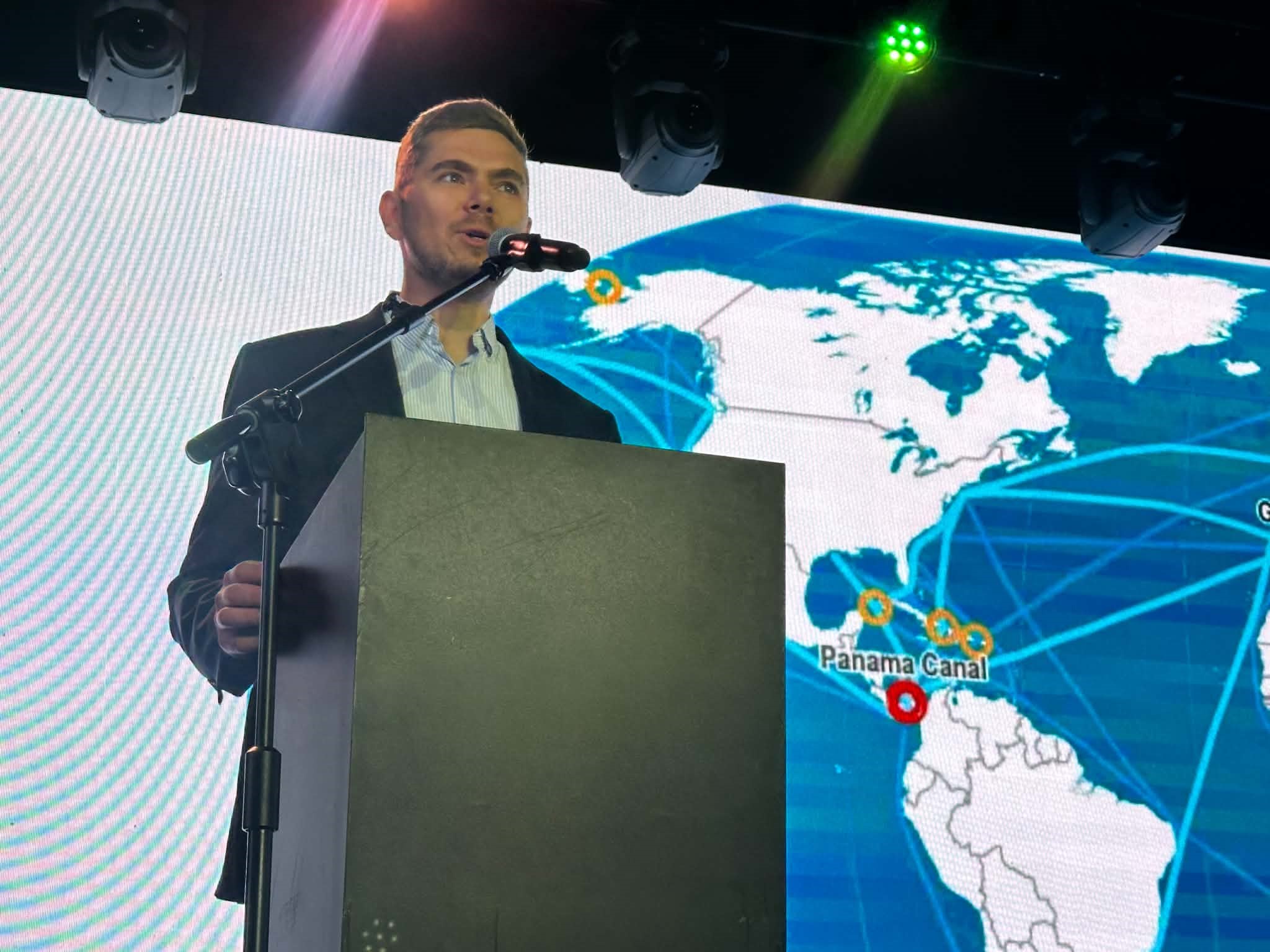


With 2030 rapidly approaching, discussions about the future of the maritime sector are increasingly becoming debates about the present. The challenges and opportunities facing the industry were the focus of a keynote speech by historian and commentator Piotr Zychowicz during the Polish Ports Congress 2030+ between 23 and 24 of June in Sopot (Kongres Polskie Porty).
In his presentation, "Geopolitics 2030+: The World, Europe and Poland's Security," Zychowicz argued that money and power have always been the primary drivers of international conflict. Throughout modern history, he said, global dominance has belonged to nations capable of controlling the seas and the world's most important trade routes. Britain held that position for centuries before the United States assumed maritime supremacy after the Second World War, a status further strengthened following the collapse of the Soviet Union. According to Zychowicz, the world is now entering a new era of multiple competing powers, with China and India steadily expanding both their naval capabilities and maritime industries, supported by their combined population of nearly three billion people.
The speaker highlighted the strategic importance of maritime chokepoints, citing the Strait of Hormuz as a recent example. Following Israeli and U.S. strikes against Iran, even the threat of Tehran closing the waterway was enough to disrupt global shipping and sharply reduce exports of oil and natural gas from the Gulf region. Although the United States achieved its military objectives, Iran survived politically and even secured concessions through a post-war agreement with Washington. The episode also exposed limitations in U.S. naval mine-countermeasure capabilities, which may increasingly require support from allied nations.
– Geography remains the decisive factor. The balance of power is determined by specific points on the map, and blocking them can trigger global economic and energy crises – Zychowicz stressed.
He also pointed to other critical maritime bottlenecks, including the Panama Canal, the Suez Canal, the Strait of Gibraltar and the Strait of Malacca. The ongoing security threats posed by the Houthis have severely disrupted traffic through the Suez Canal, forcing vessels to reroute around Africa, lengthening voyages and straining global supply chains. The Bosporus was cited as another strategic chokepoint, with Turkey's control over the strait limiting Russia's ability to reinforce its Black Sea Fleet and move military supplies.
Turning to the Baltic region, Zychowicz emphasised the importance of protecting the Danish Straits, noting that NATO has the ability to restrict Russian naval access from Kaliningrad and the Gulf of Finland. To achieve this effectively, however, allied nations must continue strengthening their naval capabilities and preparing for asymmetric maritime operations. Poland's naval responsibilities, he argued, extend far beyond the Baltic, encompassing the protection of the country's commercial interests, shipping routes and merchant vessels wherever they operate.
– Poland is a maritime nation. With more than 500 kilometres of coastline and ports that rank among the leading gateways in both the Baltic and Europe, they provide an essential outlet to the world for landlocked countries. The war in Ukraine has only reinforced their strategic importance – he said.
Zychowicz concluded that modern navies must serve not only as defensive forces but also as instruments of deterrence. A strong and credible maritime presence, he argued, is essential to discouraging potential aggression against both Poland's territory and its growing economic interests at sea.
 DOWNLOAD PDF