



The Port of Gdańsk has reported its operational results for the first half of 2026, recording a significant increase in cargo throughput and further strengthening its position as a key logistics hub in the Baltic Sea region. Total cargo volumes reached 41.7 million tonnes, an increase of 3.4 million tonnes, or 9 per cent, year on year.
The cargo structure remains stable, with liquid fuels continuing to dominate, accounting for 45 per cent of total throughput. General cargo ranked second, representing 36 per cent of all cargo handled at the Port of Gdańsk.
The rapidly expanding general cargo segment recorded a significant year-on-year increase of 17 per cent, reaching 15.2 million tonnes. Of this, the Baltic Hub Container Terminal handled 13.8 million tonnes, up by 2 million tonnes (18 per cent) compared with the first half of 2025. In terms of container volumes, the terminal handled almost 1.6 million TEU, an increase of 23 per cent. Owing to the severe winter, coal throughput also recorded a substantial increase, reaching 4.3 million tonnes, up 51 per cent year on year. The highest percentage growth (178 per cent) was recorded in the low-volume timber segment, which reached 81,000 tonnes.
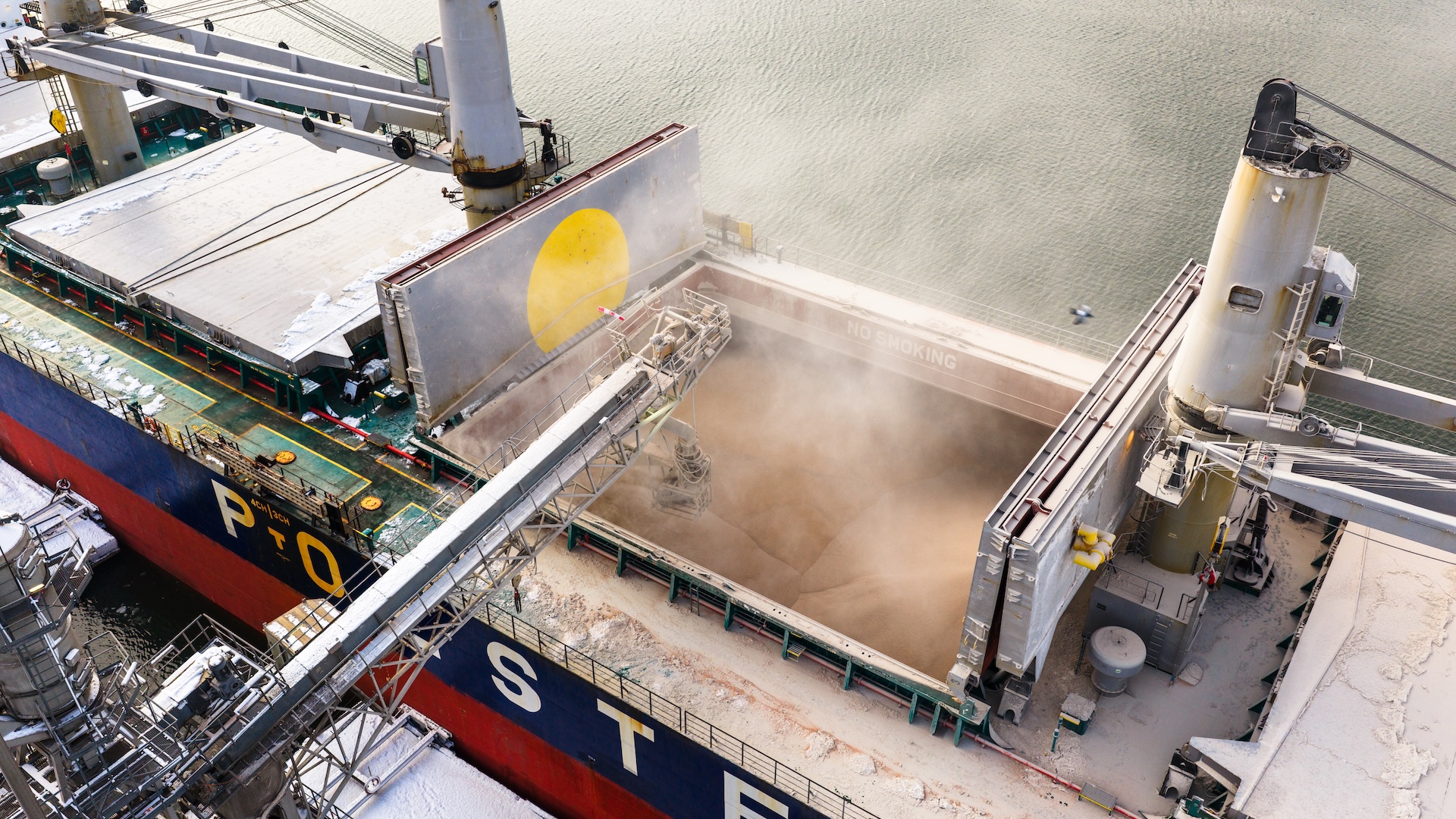
The remaining cargo groups maintained stable levels. During the first six months of the year, liquid fuel throughput totalled 18.8 million tonnes, equivalent to 98 per cent of the volume handled in the first half of the previous year. Other bulk cargo amounted to 1.8 million tonnes, representing 95 per cent of last year's volume. Grain throughput reached nearly 1.3 million tonnes, up 13 per cent year on year, while ore handling totalled 173,000 tonnes, an increase of 7 per cent.
In the first half of 2026, the Port of Gdańsk welcomed 2,193 vessel calls, an increase of 6 per cent compared with the corresponding period last year, including 1,793 commercial vessels. The port handled 126 ferry calls carrying 46,000 passengers and 16 cruise ships, which brought more than 11,000 passengers.
The results for the first half of 2026 clearly demonstrate the growing role of the Port of Gdańsk as a strategic link in global supply chains. The increase in cargo throughput confirms the port's high operational efficiency and is one of the key factors driving the need for further development of its infrastructure.
– Such a significant increase in cargo handling results confirms the growing scale of the Port of Gdańsk's operational activity and its strategic importance to the economy. It is the outcome of a development strategy focused on expanding infrastructure, increasing operational efficiency and adapting the port's offering to the changing needs of the market and business partners, implemented consistently and pragmatically – explained Dorota Pyć, President of the Management Board of the Port of Gdańsk Authority.
– The outlook for the coming months is also optimistic. The continuing growth trend, supported by stable demand for port services and the further development of key cargo segments, may result in another record-breaking year for the Port of Gdańsk. We also see considerable potential for further strengthening the position of the Port of Gdańsk—the sixth-largest port in the European Union, which is playing an increasingly important role in the global maritime economy and international supply chains – she added.
The direction of cargo flows remains an important element of the port's traffic structure. Imports totalled 27.8 million tonnes, with liquid fuels accounting for the largest share at 12.6 million tonnes. Exports reached 8.3 million tonnes, with general cargo representing the dominant category at 5.9 million tonnes. Transit cargo, meanwhile, amounted to 5.6 million tonnes.
Photo: GospodarkaMorska.pl
 DOWNLOAD PDF