

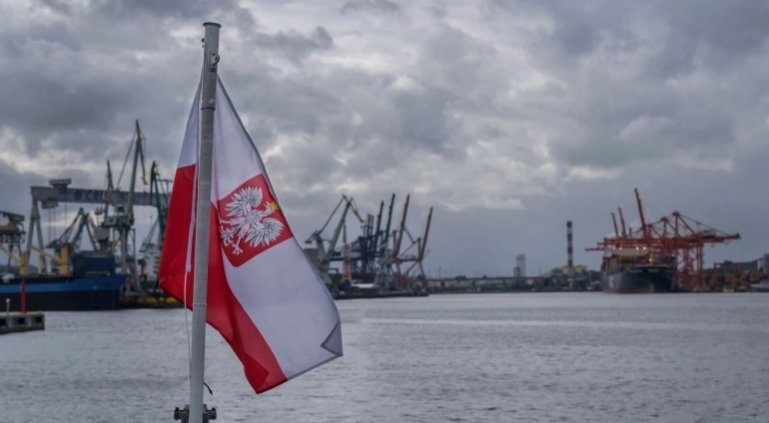


When the REJA24 system was launched in 2020, hardly anyone anticipated that, within a few years, Poland would become one of the most popular flag states for recreational vessels in Europe. Today, the register already contains well over 100,000 vessels, and a significant proportion of the owners are from abroad. The Polish flag is no longer a solution used exclusively by domestic sailors. It has become a recognisable brand on waters around the world.
However, this success led to a situation in which the legislator concluded that the register required adjustments. The justification for the draft bill highlighted, in particular:
a lack of up-to-date data on ship operators,
limited capacity to fulfil the obligations of the flag state,
instances of vessels flying the Polish flag being used for criminal activities abroad.
As a result, a draft bill was drawn up which, having considered some of the yachting industry’s proposals, represents the most significant change to the rules governing the Polish flag since the launch of the REJA24 system.
The end of lifetime registration
The public debate today focuses primarily on reviews and changes to fee levels. Paradoxically, however, the most significant change may turn out to be something entirely different: a move away from the concept of an indefinite registration document.
Until now, once a vessel had been registered, the owner or the ship operator was not required to renew the registration document. The amendment introduces an obligation to confirm the validity of the document every five years and to update the details held in the register. This does not mean that the vessel must be re-registered. The intention is for this to be an administrative procedure enabling the state to verify whether the vessel still exists, who owns it and whether the shipowner’s contact details remain up to date.
The proposed solution is reasonable. The flag state should have up-to-date information on vessels flying its flag. However, concerns are being raised about those who made decisions on the basis that the documents remain valid indefinitely. For them, the amendment means a change in the rules after they have already obtained Polish registration, which is not good legislative practice.
Suspension of a document and removal from the register
The draft bill introduces an intermediate solution between maintaining an entry and removing an entity from the register, namely the possibility of suspending the validity of a registration document.
Suspension will be possible, for example, in the event of failure to update data, the discovery of discrepancies between the information in the register and the actual situation, or a breach of obligations arising from maritime safety regulations. The draft bill provides for a ban on the operation of the vessel during the period of suspension.
The list of circumstances leading to the removal of a vessel from the register is being expanded. This primarily concerns failure to update data, failure to fulfil obligations following the suspension of a document, failure to comply with requests from administrative authorities, or certain cases relating to maritime safety.
This marks a departure from the model in which the Polish flag was seen as a virtually maintenance-free solution. For owners and ship operators who ensure their data is up to date and respond to correspondence from the authorities, the new obligations should not pose a problem.
The final assessment of the reform will depend on whether the new obligations remain proportionate and do not become a source of excessive costs or formalities for ship operators who have placed their trust in the Polish registration system in its current form.
Standardisation of HIN, WIN and INI numbers
One of the more practical changes is the clarification of the rules for identifying vessels. The draft bill allows for the disclosure in the register of other identification numbers assigned by manufacturers, rather than solely HIN, CIN or WIN numbers. This is of particular significance for vessels manufactured outside the European Union, including those manufactured before 1998.
The amendment clarifies the rules for assigning INI numbers. If a vessel does not have an identification number within the meaning of the Act, the registration authority will assign it an INI number, which must be permanently affixed to the hull. Existing manufacturer’s markings will not be removed. In the case of vessels with other identification numbers, the INI number is to be affixed in the immediate vicinity of the existing marking.
Although these changes are of a technical nature, in practice they may facilitate the identification of vessels, streamline documentation and reduce some of the problems arising in connection with registrations, changes of ownership, insurance or the verification of a vessel’s history.
Ship operator’s data to be subject to greater administrative control
The amendment expands the scope of data collected by the register, such as the owner’s nationality and, in certain cases, their email address and telephone number. The obligation to keep this data up to date will also be extended.
The Ministry points out that one of the problems with the current system is the difficulty in contacting some ship operators who operate their vessels outside Poland. The new regulations are intended to change this situation.
For a foreign owner or ship operator, this primarily means the need to manage their presence in the register more actively. At the same time, this may also bring tangible benefits. Up-to-date contact details and more organised ownership documentation enhance the security of vessel transactions, facilitate the processing of changes in ownership and reduce the risk of problems relating to the identification of the owner and ship operator by the administration, financial and insurance institutions.
If you would like to find out more about issues we mentioned so far, we encourage you to read the article “The Polish recreational flag following the amendment. Key changes to REJA24, Part 1”, which you can find on our law firm’s website.
Preliminary inspection. The foundation of the new Polish flag supervision system
The most distinctive feature of the amendment is the introduction of a preliminary inspection. This is intended to enable the flag state to carry out a thorough verification of vessels applying for Polish registration.
This is not a standard technical inspection of the sort familiar from procedures relating to the Safety Certificate. Its primary purpose is to identify the vessel and its owner and to confirm that the documentation corresponds to the actual situation.
The inspection is to include, amongst other things:
verification of the data contained in the application,
identification of the vessel,
checking of identification numbers,
verification of the vessel’s basic parameters,
assessment of the vessel’s general condition in relation of the declared mode of operation.
Owners and ship operators will no longer be able to base the registration process solely on documents. It will be necessary to demonstrate that the vessel exists and that the information provided corresponds to reality.
Who will carry out the inspections
The draft bill provides that the initial inspection may be carried out by recognised organisations. In practice, the only organisation with the appropriate authorisation is Polish Register of Shipping (PRS).
The Ministry emphasises that other recognised organisations may also apply for the relevant authorisations. At present, it should be assumed that PRS will be the main body responsible for carrying out the new duties.
The success of the entire reform will depend not on the amended regulations, but on whether PRS will be able to handle several thousand cases a year without creating queues lasting several months. In our view, this will not be possible without delegating powers to local inspectors in the concerned countries. This issue has been raised on numerous occasions by representatives of the yachting industry. We believe that this problem is not being given sufficient attention, which could lead to serious disruption to the functioning of the Polish flag. And if that happens, the system will need to be revised.
On-site or remote inspection
One of the positive changes that has emerged during the legislative process is the possibility of carrying out some inspections using electronic means of communication. This applies primarily to vessels holding a CE declaration of conformity. The final decision will rest with the organisation carrying out the inspection.
This solution is of immense importance to shipowners who maintain vessels outside Poland.
If an inspection required the inspector’s physical presence, the costs of the system could very quickly rise to a level that would be difficult for owners of recreational vessels to accept. Allowing for remote procedures should be seen as a step in the right direction. However, much will still depend on how the organisation carrying out the inspections applies the new regulations in practice.
Who will be subject to the inspection requirement
The requirement has been limited primarily to vessels that are not Polish-owned and are due to become Polish-owned. The burden of the new obligations will fall mainly on foreign owners and ship operators.
Will the Polish flag remain appealing
Despite the proposed changes, Poland will continue to offer most of the advantages that made REJA24 a success:
operation within the legal system of an EU member state,
a modern electronic register and a widely recognised registration document,
the possibility of carrying out many procedures remotely.
Crucially, the legislator has not decided to close the register to foreign shipowners. Poland remains one of the few European countries offering such broad access to its flag to owners who do not have their place of residence or registered office in the country.
However, the philosophy behind the system is changing. The Polish flag is to be not only accessible, but also more credible. At the same time, one cannot overlook the fact that it is primarily foreign owners who will be subject to additional obligations and higher costs associated with maintaining Polish flag registration.
What does this mean for vessels already registered with REJA24
The proposed amendment will also apply to vessels already registered. The documents will not automatically expire. Owners will have to confirm their validity and up-to-date status at the appropriate time, depending on the date of the original registration or the last change to the vessel’s details. The legislator has provided for transitional periods lasting several months, depending on the date of the vessel’s registration.
In the case of vessels not owned by Polish nationals, it will be necessary to carry out a preliminary inspection and submit the relevant documentation. This obligation will also apply to vessels that were registered in Poland many years ago.
If the owner or ship operator fails to comply with the new obligations by the deadline, this may result in the suspension of the entry, the expiry of the registration document, and subsequently the removal of the vessel from the register. At the same time, relatively long transition periods have been provided for, which should enable owners to prepare for the new requirements at their own pace.
The aim of the reform appears to be not so much to reduce the number of vessels in the register as to gradually ensure that the administration has up-to-date information on all ship operators flying the Polish flag.
You can find more information about mentioned topics on our law firm’s website in the article “The Polish recreational flag following the amendment. Key changes to REJA24, Part 2”.
Summary
The final form of the reform has not yet been decided. The bill remains at the parliamentary stage, and its individual elements may still be subject to change.
The attractiveness of the Polish flag will depend primarily on how the new regulations are applied in practice. If the procedures prove to be efficient, predictable and cost-effective, Poland has every reason to believe it can maintain its position as one of the most competitive and recognisable recreational registers in Europe. Its advantage will no longer lie solely in simplicity, but in a combination of accessibility, reliability and the prestige of the flag state.
Lastly, we invite you to download our e-book “Safe Yacht Purchase 3.0”. In it you will find information on how to safely buy your dream boat, including a sample bill of sale template.
Prepared by Wind & Water Legal Zbroja
Maciej Janicki, Jakub Rodziewicz, Maciej Juszkiewicz
 DOWNLOAD PDF
